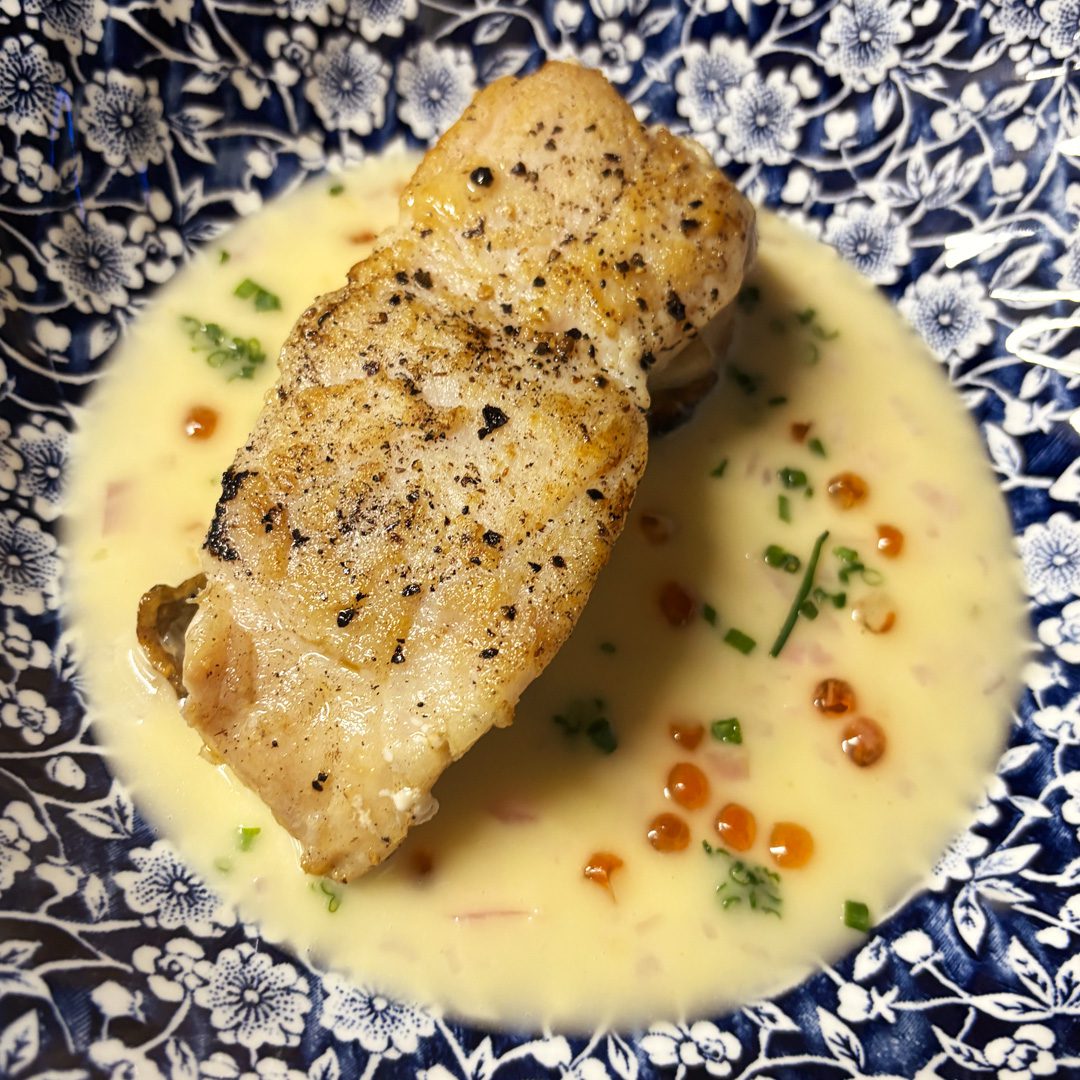
An Exploration of Beurre Blanc
October 12, 2026
Working in food media, I have dined at countless restaurants ranging from some of the most highly-rated in the world to the random foreign back-alley food stall and everything in between.
When you have been observing restaurants for decades, you begin to notice the patterns. Patterns of service, patterns of restaurant styles, and patterns of menus. On the menu, the deeper patterns will showcase a specific cuisine style and will usually be broken down into courses. There are always starters or appetizers, followed by slightly bulkier “small plates”; depending on the restaurant, you may get a small pasta section, and there will always be some options for main entrees and desserts.
The entree section will usually have a similar structure as well. Maybe a pork chop, or rib-eye or hangar steak, chicken, a hearty vegetarian main, and always a seafood option. In my experience, one of the entrees I see the most across hundreds of menus is some version of seared fish served with beurre blanc.
What is Beurre Blanc?
Beurre blanc is a sauce made with four commonly found pantry ingredients. A combination of finely minced shallots is reduced with a dry white wine and white wine vinegar and is mounted with cold butter until the mixture becomes a creamy and emulsified sauce. It’s bright, tangy, and lightly balanced with a buttery richness that beautifully coats a piece of seafood, chicken, or vegetables and brings an elevated quality to the dish.
Depending on the restaurant, an entree of seared fish and beurre blanc could range anywhere from $30-$40 per plate, give or take. It’s on most menus because when all the ingredients and techniques have been properly executed, this can be an absolutely delicious dish that sings. Savory fish enrobed in a vibrant and rich butter-based sauce- what could ever be wrong with that?
Bringing the Restaurant Home
It’s a terrible circumstance to have the desire to eat well and “upscale” and not be able to afford it. I spent my 20s and much of my 30s living below the poverty line, and I learned early on that cooking at home saved so much money. Part of the reason why I went to culinary school was to learn how to eat better at home with the ingredients I had accessible to me and my bank account.
The classism of eating certain cuisines or with certain ingredients, the lack of accessibility, and the financial othering that ostracizes people who can’t afford these experiences frustrate me to no end. Part of the purpose of my website and this newsletter is to try to make that style of cuisine, which people consider more technical or “elevated”, a bit more accessible. My back-of-house experience in the kitchens of highly-rated restaurants taught me that so much of what we pay for and revere as fine dining can be achieved at home with a little learning and perfecting.
One of the first things they teach in culinary school is sauces. Pan sauces in particular are super simple, take minutes to prepare, and give whatever they’re accompanying deepened flavors, rich textures, and a touch of refinement. Beurre blanc is a great sauce to learn for a date night or when you are hosting a dinner party and want to treat your guests to a more refined experience, but it’s also a great technique to have in your arsenal when preparing a solo weeknight dinner.
A pan-seared piece of fish served with beurre blanc can be prepared in less than 30 minutes. A side of sautéed greens and roasted potatoes et voilà, you have yourself a meal you can find on many fine dining menus, and that can be achieved in under an hour for a fraction of the price.
Classic Beurre Blanc with Shallots
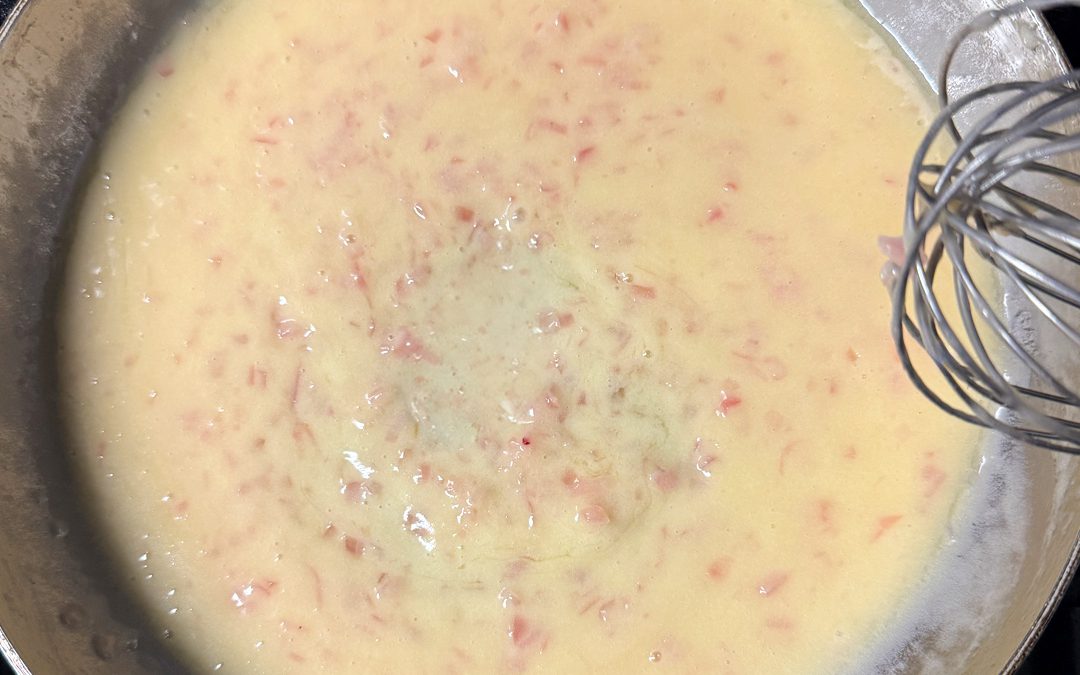
I start with a classic preparation of beurre blanc: minced shallots reduced in white wine and white wine vinegar. A note before you begin. When you are cooking the first three ingredients, you want to be sure to leave at least 1-2 tablespoons of liquid in the pan. The butter only emulsifies if it has something to combine with. A mistake I made early on was to over-reduce the liquid; the sauce won’t sauce if you do that. The butter needs a friend to bind to for a successful emulsification process.
You can substitute white wine for any old white wine thing you have in your fridge. I’ve made beurre blanc with old flat prosecco and other sparkling leftover white wines.
Miso Beurre Blanc
While I love all the shades of miso and the depth and flavors it brings to ingredients, I often feel like miso recipes have been done to death. Like, I get it, add it to anything and call it the best. It’s true, but sometimes I feel like it’s a gimmick for clicks (it has really great SEO). It feels like every miso recipe in the world already exists. After over a decade in this industry, welcome to my first miso recipe!
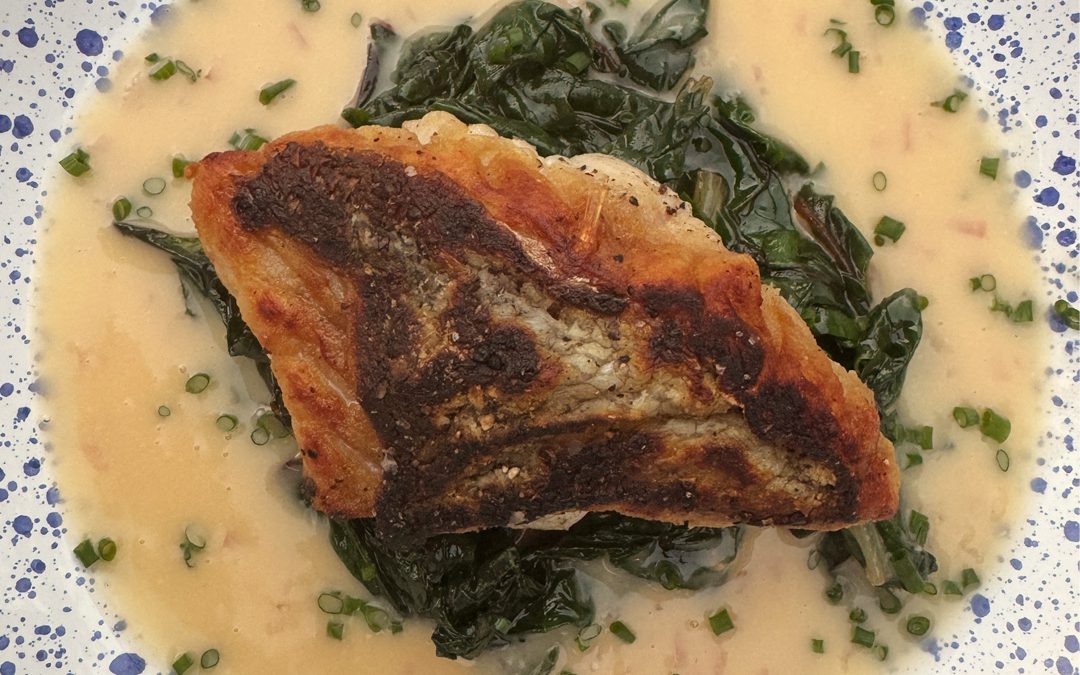
A while back, I was enjoying a dinner at Theodora in Brooklyn. I love this spot, but it can be so impossible to get into. One solo night out, I was able to slip into the last counter spot. I enjoyed my entire meal, but afterward, my thoughts would often linger back to my entree of a dry-aged black cod, prepared over the wood-fired grill and served with a miso beurre blanc. I always know that if I get to my second or third dish of a meal and inhale it as ravenously as my first dish, that means something in the dish has taken me to the upper echelon of palate joy that supercedes any satiated state. I achieved that elation on that evening.
In this iteration of beurre blanc, I add white miso paste to the classic recipe. It adds complexity and depth to the classic flavor profile. I found it was best to add half the butter first to get the emulsification process going, then whisk in the miso to give it time to warm and dissolve, then finish with the remaining butter.
Beurre Blanc with Caviar (or Smoked Trout Roe)
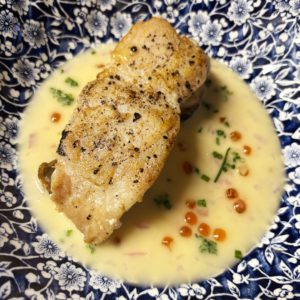
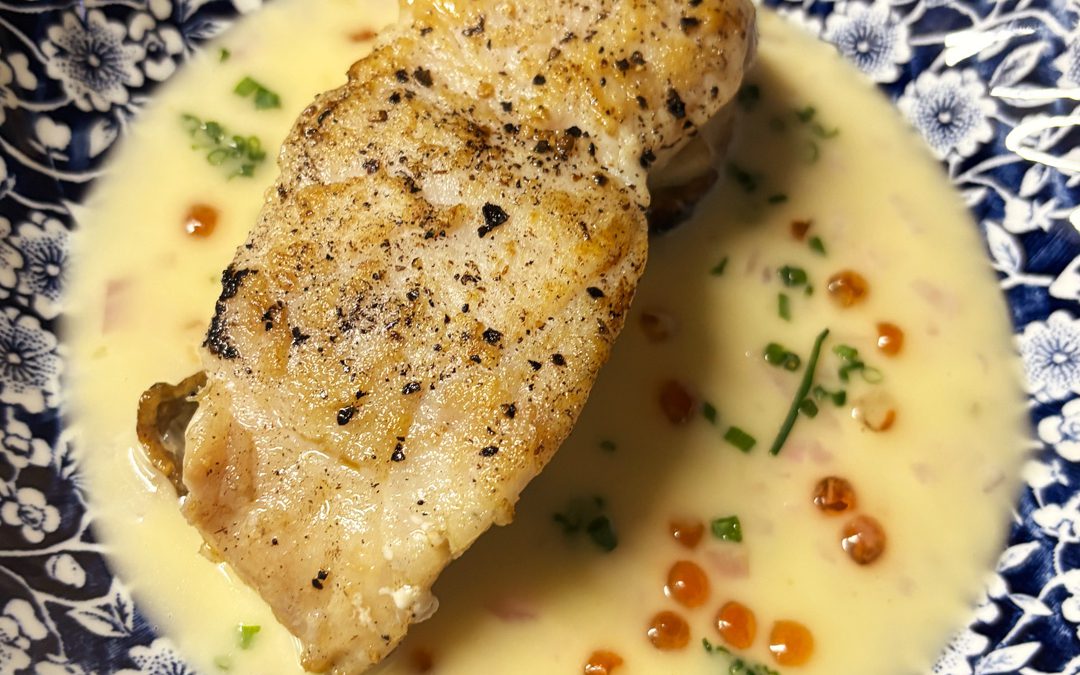
I love to take the classic beurre blanc and add a little panache with the addition of caviar. I’ve seen this done at a few restaurants, and the little black dots add a striking visual quality and little pops of oceanic salinity to the bite. I also love using smoked trout roe for little orange color pops with added smoky essence. Use one or both; use a lot or a little- it’s up to you, but 1 to 2 ounces is the sweet spot for this recipe.